NOTE: This
is
a page I've wanted to do
for a long time.
After
discovering the Beach
Boys, I've sought out
similar artists, who
both preceded and
followed the sound templet
that Brian Wilson
& Co. charted in the
1960s. While not all
of the
artists here are directly
related to the Beach Boys,
their sound
closely adhears to the
feel-good/melancholy
mixture that Brian
Wilson and the Beach Boys
so
successfully mined.
Due to space constraints,
I'll try to
list samplers or greatest
hits collections of
artists where possible,
rather than complete
discographies, sort of a
jumping board for those
who want to plunge
into deeper
waters.
Enjoy!
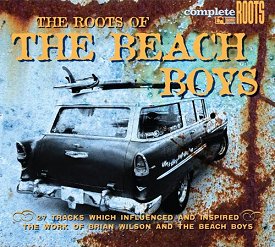
The
Roots Of The Beach Boys: 27
Tracks Which Influenced and
Inspired the
Work of Brian Wilson and The
Beach Boys
Snapper UK SBLUECD
090 [CD];
Released May 8, 2012
1.
Sweet Little
Sixteen
(Berry)
3:00
2. Louie
Louie
(Berry)
2:09
3. Do You Wanna
Dance
(Freeman)
2:32
4. Moon
Dawg!
(Gamblers)
2:13
5. Hully
Gully
(Hollywood
Argyles)
2:16
6. Riot In Cell
Block Number
9
(Robins)
2:59
7. To Know Him is To
Love
Him
(Teddy
Bears)
2:21
8. Graduation
Day
(Four
Freshmen)
3:01
9. I Don't Want To
Cry
Anymore
(Hi-Lo's)
2:40
10. Hearts of
Stone
(Williams)
2:34
11. Summertime
Blues
(Cochran)
1:55
12. Devoted To
You
(Everly
Brothers)
2:22
13. Bluebirds Over
the
Mountain
(Valens)
1:44
14.
Hushabye
(Mystics)
2:29
15. I'm So
Young
(Students)
2:28
16. Deep
Purple
(Ward)
2:13
17. Mountain of
Love
(Dorman)
2:20
18. Cindy Oh
Cindy
(Fisher)
2:58
19.
Summertime
(Gershwin)
2:25
20. Put Your Head On
My
Shoulder
(Anka)
2:37
21. The Things We
Did Last
Summer
(Stafford)
3:01
22. In the Still of
the
Night
(Five
Satins)
2:58
23. Ruby
Baby
(Drifters)
2:21
24. A Casual
Look
(Six
Teens)
2:17
25. Blueberry
Hill
(Domino)
2:20
26. Cotton
Fields
(Leadbelly)
2:05
27. The Wreck of the
John
B
(Kingston
Trio)
3:29
REVIEW:
A CD hailing from the
UK which does a good, if not
comprehensive
job of
chronicling the songs and
artists which helped to
influence Brian
Wilson and the Beach Boys in
developing their signature
California
sound. The Beach Boys
didn't grow up in a musical
vacuum, and
throughout their career they
have paid homage to their
influences,
sometimes simply stealing a
musical idea ("Surfin' USA"
takes it's cue
from Berry's "Sweet Little
Sixteen") or performing the
ultimate
flattery by simply covering
a favorite on one of their
albums.
What's here is a a
musical history of America's
Band: Brian's
infatuation with The Four
Freshman's sound can be
heard in the original
version of "Graduation Day",
while he also loved the
simple schmaltz of
Jo Stafford's "The Things We
Did Last Summer". The
Everly
Brothers were a huge early
influence of Mike &
Brian's, as can be
heard on the Party!
album's "Devoted To You,"
while other covers the Beach
Boys tackled
include: "Louie Louie,"
"Moon Dawg," "Hushabye," "Do
You Wanna Dance?"
and "Cindy Oh Cindy".
Some of these choices
were simple
expediency, with The Beach
Boys pumping out three or
four albums a
year, it was necessary to
line the track listings with
popular songs by
other artists; or, as in the
case of 1976's 15 Big Ones,
songs that a then-drug-fried
Brian Wilson could latch
onto were chosen,
thus the inclusion of "Riot
In Cell Block Number 9," "In
The Still Of
The Night," 'Ruby Baby" A
Casual Look" and "Blueberry
Hill" which all
hail from that era.
Conspicuous in their
absence are several
songs who's rights couldn't
be obtained, but which would
easily fit:
Disney's "When You Wish Upon
A Star," Dion & The
Belmont's "The
Wanderer" or The Beatles
"Tell My Why" all might have
been a better
inclusion than The
Hi-Lo's "I Don't Want
To Cry Anymore" or The
Charms' "Hearts Of Stone".
Still, this is an
informative release,
and interesting listening
for those who are curious
about the musical
gene-pool from which The
Beach Boys sprung.
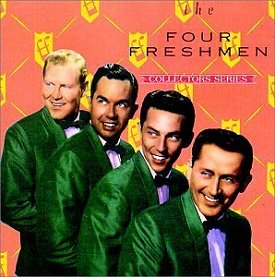
The
Four
Freshman: Capitol
Collector's Series Capitol
93197 [CD]; Released
January 21, 1999
1.
It's
a Blue World [Forrest,
Wright] 2:56
2. The Day Isn't Long
Enough [Carey, Howard]
2:55
3. Poinciana [Bernier,
Simon] 3:11
4. It Happened Once
Before [Troup] 2:30
5. Please Remember
[Gross, Troup] 2:51
6. We'll Be Together
Again [Fischer, Laine]
3:09
7. Mood Indigo
[Bigard, Ellington,
Mills] 2:43
8. It Never Occurred
to Me [Coleman, Oken,
Persons] 3:06
9. Day by Day [Cahn,
Stordahl, Weston] 1:58
10. How Can I Tell Her
[Evans, Livingston]
2:38
11. Charmaine
[Pollack, Rapee] 2:18
12. In This Whole Wide
World [Cascales,
Roland] 2:46
13. Angel Eyes [Brent,
Dennis] 3:33
14. Love Is Just
Around the Corner
[Gensler, Robin] 2:02
15. Graduation Day
[Sherman, Sherman]
3:06
16. Whistle Me Some
Blues [Denison,
Holiday] 2:35
17. It Could Happen to
You [Burke, VanHeusen]
3:26
18. Candy [David,
Kramer, Whitney] 2:16
19. Route 66 [Troup]
2:47
20. Their Hearts Were
Full of Spring [Troup]
3:14
21. And So It's Over
[#] [Barbour] 2:53
REVIEW: It's
hard to
believe now, but
this ultra-square (or
ultra-cool, depending on how
you look at it)
group is
the inspriational spark
that defined the sound of
the
Beach Boys - namely, their
thick, dynamic harmonies
that no other group
could match then or
now. According to
Brian Wilson, one day
he heard one of
his father's Four
Freshman records
and immediately was able to
fathom the group's complex
four-part
harmonies and duplicate
them by
enlisting his family
and a school chum. And
it's here, on this concise
collection
of their signature songs,
that you hear just how
reverently
Brian borrowed
from the Freshman,
whether it was the
thick harmonic dynamics on
"Keep An Eye On Summer" or
the note-for-note
recreation of "Graduation
Day" and "Their Hearts Were
Full Of Spring"
(both of which can be found
here in their original
incarnations),
you'll have no problem
identifying the well-spring
of inspiration that
jump-started the Beach Boys
'sound.' But
where the
hottest the Freshman ever
got was the occasional swing
or bossa-nova
rhythm, Brian Wilson fused
the Freshman's harmonies
with Chuck Berry's
R&B and the hot drive of
Dick Dale's jittery guitar
licks into
a wholly unique, American
sound. You can hear
the Beach Boys'
forebearers on this CD, but
it's only a part of what
became the
whole. An interesting
listen for those who love
the Beach
Boys' harmonies, and if you
like this album, you ought
to check out the
Freshman's swinging Four
Freshmen and 5
Trombones/Four
Trumpets
two-fer; it's a good time.
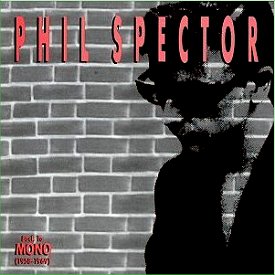
Phil
Spector: Back To Mono
(1958-1969) [Box Set]
Abkco
7118 [CD]; Released
November 12, 1991
REVIEW:
Brian
Wilson
worshipped
at the
feet of Phil Spector. Doting
on such singles as The
Ronettes' "Be My
Baby" (still his all-time
favorite song) Brian never
felt like he left
the shadow the the enigmatic
producer whose output and
stylistic "Wall
Of Sound" were expressly
responsible for the Beach
Boys incredible
backing tracks. Not only did
Brian imitate Spector's
production
methods, he borrowed Phil's
session players, the
'Wrecking Crew' in
order to duplicate the dense
sound that Spector produced
in the studio.
Phil Spector is the closest
thing to Brian Wilson there
is: a talented
writer and producer whose
uncanny knack for writing
hit singles landed
him at the top of the charts
again and again and in the
process created
some of the most enduring
singles in the history of
Rock 'n' Roll: "To
Know Him Is To Love Him," "I
Love How You Love Me,"
"There's No Other
Like My Baby," "He's A
Rebel," "He's Sure The Boy I
Love, "Da Doo Ron
Ron," "Chapel Of Love" and
"River Deep, Mountain High."
When it came to
choosing and producing
three-minute singles,
Spector was king. And the
talent he worked with is the
envy of producers
everywhere: Ronnie
Spector, The Righteous
Brothers, Tina Turner, and
Darlene Love, just to
name a few. Where
Brian eventually
surpassed Spector
(and where Spector failed to
go) is in the development of
the album as
an art form. The Beatles,
The Beach Boys, and
countless other artists
took advantage of the
greater fidelity and playing
time of the LP and
began to construct suites of
music that strung together
stylistically. And
Brian's production was
cleaner
and brighter than Spector's
- Spector's
singles could sound
like a clap of thunder
coming out of the car
speakers, but
Brian's productions sparkled
with clarity, he separated
and highlighted
each instrument, while
Spector buried his in ever
heavier
layers. Make no
mistake, this stuff packs a
tremendous punch,
both sonically and
musically; it's absolutely
essential pop history as
vital and alive now as it
ever was. It's easy to
see why
Brian emulated this
excruciating pop craftsman
in his own recordings.
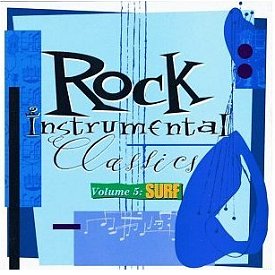
Rock
Instrumental
Classics: Vol. 5: Surf
Rhino/WEA
71605
[CD];
Released March 22, 1994
1.
Pipeline
- The Chantays
2. Mr. Moto - The
Belairs
3. Wipe Out - The
Surfaris
4. Underwater - The
Frogmen
5. Misirlou - Dick
Dale And The Del-Tones
6. Diamond Head - The
Ventures
7. Baja - The
Astronauts
8. Surfer's Stomp -
The Mar-Kets
9. Bustin' Surfboards
- The Tornadoes
10. Penetration - The
Pyramids
11. Mr. Rebel - Eddie
and The Showmen
12. Fiberglass Jungle
- The Crossfires
13. K-39 - The
Challengers
14. Point Panic - The
Surfaris
15. Let's Go Trippin'
- Dick Dale And The
Del-Tones
16. Surf Rider - The
Lively Ones
17. Soul Surfer -
Johnny Fortune
18. The Lonely Surfer
- Jack Nitzsche
REVIEW:
It's
difficult to understand
why Brian would want to
try and break into the
surf-music genre in the
beginning of the band's
career; Brian wasn't a
surfer, and "surf music"
at that time was dominated
by instrumental
music, and a handful of
R&B artists; there's
never really been
an adequate explanation of
his and Mike's decision to
accept Dennis's
enthusiastic suggestion to
write about surfing unless
you accept the
concept that the band was
trying to come up with a
hook that would
resonate with teenagers.
And then it's easier
to see how The
Beach Boys' entry into
this narrow genre would
change not only its
sound, but American music.
This single CD is
the ideal
starting place to peek
into Surf Music at its
most successful. The
formula for it was simple:
jittery guitars set at
maximum reverb,
barely-restrained
drumming, an
amphetamene-laced progress
which was set
to simulate the surfing
experience, and the
occasional insane laugh
inserted to demonstrate a
disregard for life and
limb. This
was highly sexual music -
muscular, taut, and meant
to be viewed as
dangerous - the entire
rock ethos in a two-minute
long ride.
There's the creepy
wail of "Wipe Out" by the
Surfaris, the
moody, dangerous
progressions in The
Pyramids' "Penetration",
two cuts
by the "King" of surf
music, Dick Dale and
The Del-Tones,
which made the whole genre
viable; and then there's
the panoramic soul
of the surfer laid bare in
Jack Nitzsche's "The
Lonely Surfer".
Other gems include
the echo-drenched
"Fiberglass Jungle" by
The Crossfires, the
surprisingly sophisticated
stylings of "Baja" by
the Astronauts, the
grinding "Underwater" by
the Frogmen, and the
haunting, unforgettable
"Pipeline" by The
Chantays. It's
clear by listening to this
that The Beach Boys were
never really "surf
music" artists - they took
what they heard, and
changed it into
something new. And
if you want more, here's a
deeper look
into Surf
music
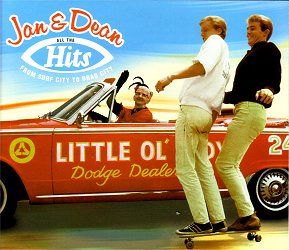
Jan
&
Dean: All The Hits
- From Surf
City To Drag City EMI
Records 8 53730
2 [CD];
Released November
12, 1996
In
the beginning,
the Beach Boys were
lumped together with Jan
& Dean as a sort
of "surf and drag"
genre. And for the
most part, that was
true; The Beach
Boys and Jan & Dean
ran in the same
circles for several
years, singing and
performing each other's
songs,
and hanging out
together. It's no
secret that J&D's
biggest hit, "Surf City"
was given to them by
Brian Wilson, and Dean
was an uncredited singer
on one of the Beach Boys
biggest hits,
"Barbara Ann." But
for all that, Jan Berry
and Dean Torrence
were really no match for
the Beach Boys, as this
comprehensive
compilation
proves. Whereas
Brian Wilson felt
constricted by
the Car and Surf labels
put on him, Jan &
Dean revelled in
it. They started
out as sort've cut-rate
Everly Brothers,
doing two-part
teeny-bopper love songs
like "Jenny Lee" and
"Baby Talk"
that had heavier doo-wop
rhythms than other
aritsts, but eventually
hooked into the surfing
scene and had tremendous
success with the
aforementioned "Surf
City," "She's My Summer
Girl" and "Ride The Wild
Surf." They also
heavily mined the Car
and Drag circuit with
"Drag City," "Three
Window Coupe" and the
prophetic "Dead Man's
Curve"
(the very curve where
Jan Berry nearly lost
his life.) They
also had no compuction
against recording
novelty numbers like
"Sidewalk
Surfin'," "The Little
Old Lady From Pasedena"
and "The
Anaheim,
Azusa & Cucamonga
Sewing Circle, Book
Review And
Timing Association"
which knocks them down
a couple of notches in
most
respectable rock 'n'
roll circles.
What may surprise
those
who haven't
investigated Jan &
Dean are how they
evolved much
like the Beach Boys in
the sound, especially
during 1965-'66 when
Jan
Berry began to write
and produce songs that
were richer and
meatier in
their subject matter,
like the excellent
"You Really Know How
To Hurt A
Guy," It's A Shame To
Say Goodbye" and the
"Dead Man's Curve"
retread:
"A Beginning From An
End." Jan and
Dean were also able to
utilize Phil Spector's
backing musicians,
dubbed "The Wrecking
Crew"
for most of their
recordings, which
makes them sound much
better and
polished than the
typical surf-rock
music that was being
released. But
for all their success,
Jan & Dean never
really outgrew their
light surf-rock
stylings, and it's
here, on
this double-CD compilation,
that their best-known
and
best loved hits can be
found. Jan &
Dean have a
simple sound, two-part
harmony with songs
that lean heavily on
surf
guitar and revving car
engines, and they
still have the power
to
hearken back to a
simpler time that
evokes good vibrations
for many
fans. For a more
complete look at their
discography check out
my related
artist
page on Jan &
Dean.
Or
purchase from
Amazon.co.uk: Jan
& Dean
The
Four
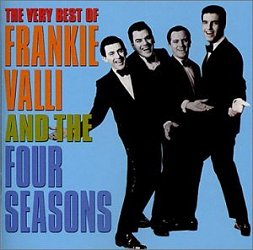
Seasons: The Very
Best of Frankie Valli
and the
Four Seasons
Rhino
Records
74494 [CD];
Released January 14,
2003
For
a little while, Brian
Wilson considered not the
Beatles, but the Four
Seasons as the Beach Boys'
main artistic
rivals. At first
glance, this makes sense;
both groups were formed
around the sound of a
high falsetto lead voice,
with rich backing vocals
covering a rock 'n'
roll beat. But
that's where the
similarities end.
Where the Beach Boys were
carving out a distinctive
West Coast sound to
go with their reshaping of
the California image,
Frankie Valli and the
Seasons were pure East
Coast, and their songs had
a hard-edged swagger
to them that Brian Wilson
never had. And
despite their
similar harmonic
structures, Valli's
falsetto was far more
poweful and
punchy than Brian's, where
brian was a flute, Frankie
was a soprano
sax: he growled more in
his phrasing, and vocally
seemed to carry a
large chip on his
shoulder. The
songs that they
sung, mostly written and
produced by
studio wizard Bob
Gaudio,
were street vingnettes of
the city - and had their
roots in New York
Doo-Wop tradition that
emphasized rhythm and
masculinity over the
prettier ballads of the
crooners. These
songs are still
great, from the
declaratory "Walk Like A
Man" to
the tear-your-heart-out
cry of "Sherry" and
the
street smart attitude of
"Big Girls Don't Cry" the
Season pioneered a
sound like no one
else. But whereas
the Beach Boys music grew
richer and more relevant
in the mid-to-late
Sixties, the Seasons music
grew more and more
irrelevant as the decade
progressed, being too
locked into the late-50's
doo-wop style that they
never really
abandoned. But
still, the Seasons' best
is very good indeed,
and it's all here from
their first big hit to
their surprising 70's
combacks "Who Loves You"
and "Oh, What A
Night." Great
singing and great songs.
The
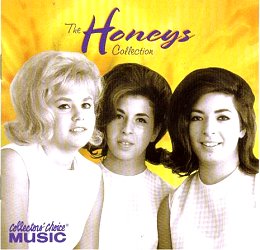
Honeys: The Honeys
Collection Collector's
Choice
Music CCM163-2 [CD];
Released June 21,
2001
A
page on artists
related to the Beach Boys
simply couldn't be
complete without at least
one CD of The Honeys - I
mean one of the members
was married to Brian
Wilson and is the mother
of Carnie and Wendy Wilson
- it just doesn't
get more familial than
that! The Honeys
were formed
by two Rovell
sisters, Marilyn (nee
Wilson) and Diane, as well
as Ginger Blake.
Their early
material was written and
produced by Brian Wilson,
Gary Usher, and
Diane himself, as
well as many others, and
their early sound
was consciously styled to
be a compliment to the
Beach Boys, with the
songs glamorizing the
California "two girls for
every guy" surfer
ideal. Therefore you
have songs like "Shoot The
Curl,"
"Surfin' Down The Swanee
River," "Pray For Surf,"
and "Three Surfer
Boys" dominating the first
third of the disc, and
while they all bear
the inimitable stamp of
Brian Wilson's production
flair, none of the
songs are really
top-notch, and a few are
pretty dumb "(Oly Oxen
Free
Free Free) Hide Go Seek")
- but all of them have
that early-sixties
charm that you can find in
practically any Gidget
movie; a throwback to
a more innocent
time. But there are
a couple of knockouts
here that rank with any of
the best Girl Group songs
out there: "The
One You Can't Have" and
"He's A Doll" are
sparkling gems that
deserved
greater chart play than
they received, with
Brian's deft production
touches pushing the fine
songcraft over the
top. Other tunes
also come off very well,
with a wall-of-soundish
"In The Still Of The
Night" benefiting from a
thick three-part harmony
arrangement and dense
backing track, and for
collectors, the inclusion
of the rare Glen
Campbell song "Guess
I'm Dumb" (which the
Honeys provided
backing vocals for) is a
real treat. This
collection leans
most heavily on tracks
from the mid-sixties, with
just a couple of
extremely rare cuts culled
from The Honeys 1983 album
Ecstasy.
Unfortunately, the
producers have missed some
fine cuts from the 1972
album Spring,
when the Honeys were
calling
themselves American
Spring, which prevents
this album from being a
truly comprehensive
overview of this often
overlooked Girl Group.
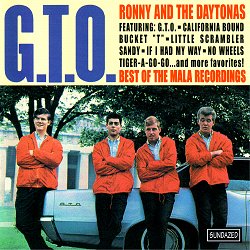
Ronny
And
The Daytonas: G.T.O.
- Best Of The Mala
Recordings Mala
4001
[LP]Sundazed
Music 11406 [CD];
Released February
13, 1997
Ronny
and
the Daytonas were
another
"manufactured"
group that hung
onto the
coat-tales of the
Beach Boys,
but this time
hailed from
Nashville,
Tennesee!
Comprised
mostly of John
"Bucky" Wilkin and
producer Bergen
White, who
although
he hated rock 'n'
roll music, agreed
to produce
Wilkin's single
"Little
G.T.O." which
became a huge hit,
and an album was
quickly recorded
to
capitalize on its
success.
Although the songs
are mostly
second-rate Beach
Boys wannabes,
there are a few
real gems, from
the
corny
"Tiger-a-go-go" to
the too-obvious
homage "Beach Boy"
to the
dreamy and
wonderful ballad
"Sandy" (which was
recorded on their
ballad-heavy
second
album). In
fact the second
half of this
album is far more
enjoyable than the
first - sort of
like the Daytonas
version of The
Beach Boys'
"Today!" album,
which had a
rocking first
half and the
second half veered
off into more
introspective
ballads.
Although John
Wilkin's
sentiments never
dug as
deeply as Brian
Wilson's (whose
did?) it's still
expertly produced,
beautifully
composed ballads
that push this
compilation above
the
average
hot-rod/surf bands
that were
springing up in
the
early-Sixties.
In the informative
liner notes John
Wilkin
admits to trying
to copy the Beach
Boys' sound, and
to some degree
(and
in a way he
probably didn't
realize) he
succeeded. A
real
find, and worth
checking out for
the startling
contrast of styles
in
evidence.
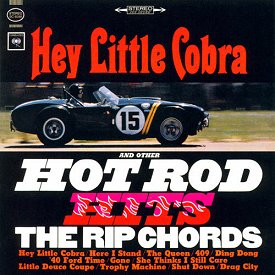
1. Hey
Little Cobra 2.
Here I Stand 3.
Queen 4.
409 5.
Trophy Machine 6.
Gone 7.
Little Deuce
Coupe 8.
'40 Ford Time 9.
She Thinks I
Still Care 10.
Shut Down 11.
Drag City 12.
Ding Dong 13.
Karen - (bonus
track) 14.
Bunny Hill - (bonus
track) 15.
Don't Be
Scared - (bonus
track)
REVIEW:
The
Rip Chords may
have started
out as a
two-man band,
but eventually
were nothing
but another
front for
talented
producers/songwriters/singers
Bruce Johnston
and
Terry
Melcher.
True
contemporaries
of The Beach
Boys (with
one a future
member), Bruce
and Terry had
a distinctive
sound which,
although they
tried to match
the vocal
prowess of The
Beach Boys,
sounds far
more
compressed and
robotic than
the Beach Boys
ever did,
since the
songwriters
multi-tracked
their own
voices and
then
compressed
everything on
a primitive
recorder.
So although
the Rip
Chords' sound
has never been
my favorite,
there is
undeniable
fun and energy
here as they
focus their
songs on cars
and
racing.
"Hey Little
Cobra" was a
solid hit, and
fans of the
Beach Boys
will find that
song as well
as a few
covers of
Brian Wilson
songs, in the
form of "409,"
"Little Deuce
Coupe" and
"Shut Down"
included.
None of these
covers come
close to
matching the
charm and
sound that the
Beach Boys
could produce,
but is
interesting
for
comparison,
and other
songs here,
from "Here I
Stand" to
"Ding
Dong" (a
personal
favorite, more
in the style
of 50's rock
'n' roll
than most) and
the Everly
Brothers
tear-'em-up
clone "Karen"
are enough
to keep most
listeners
happy.
Sundazed,
which put out
their
second album
Three Window
Coupe
(reviewed
below) as well
as a "greatest
hits" package,
does the Rip
Chords legacy
proud.
The
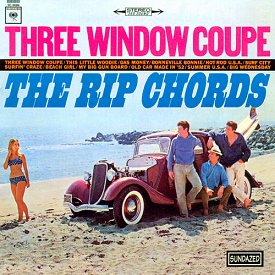
Rip
Chords:
Three Window
Coupe
Sundazed
Music 6099 [CD];
Released August
20, 1996
1.Three
Window Coupe
2.Bonneville
Bonnie
3.Gas Money
4.This Little
Woodie
5.Hot Rod U.S.A.
6.Old Car Made
in '52
7.Surfin' Craze
8.Beach Girl
9.My Big Gun
Board
10.Surf City
11.Summer U.S.A.
12.Big Wednesday
13.One Piece
Topless Bathing
Suit - (bonus
track)
14.Wah-Wahini -
(bonus track)
15.Red Hot
Roadster -
(bonus track)
REVIEW:
The
Rip Chords Three
Window Coupe
LP was cut in a
series of
singles after
the success
of Hey
Little
Cobra.
But
with "Three
Window Coupe"
b/w "Hot Rod
USA" chosen as
the next
single due to
the professional
writing punch of
Roger
Christian/Jan
Berry, the
producing team
of Terry Melcher
and Bruce
Johnston decided
to take over the
vocal duties
completely from
Ernie Bringas
and Phil
Stewart, causing
some small stir
among Columbia
Records top
brass, but
eventually the
project was
green-lighted,
with the former
Rip Chords
relegated to
in-studio
appearances, but
no actual lead
or backing
vocals. As
the lead-off
single stalled
at #29, the
follow-up
single, "One
Piece Topless
Bathing Suit"
(which was
originally
written
for Jan &
Dean) b/w
"Wah-Wahini"
tanked in the
charts, while
the
album, which was
cobbled together
from material
from Melcher
&
Johnston ("Big
Wednesday," "Old
Car Made in
'52," and
"Summer USA")
three songs from
Fantastic Baggys
Phil Sloan and
Steve Barri
("This
Little Woodie,"
"Surfin' Craze"
and "Big Gun
Board"), and a
few select
chose covers
("Surf City,"
"Gas Money")
tanked, not even
cracking
Billboard's Top
200 albums,
effectively
ending The Rip
Chords brief
career.
Listening now to
Sundazed's
excellent
transfer, it's
hard
to understand
why the album
didn't sell
better, the
songs are well
produced, well
sung, and if
"One Piece
Topless Bathing
Suit" was
probably a
mistake as a
single (I
personally
would've chosen
"This
Little Woodie"
b/w "Beach
Girl"), there's
still plenty
that should've
enticed 1964
audiences.
The Rip Chords'
sound retains
that
shimmery
etherealness
present on Hey
Little Cobra and
a minimum of
clunkers (OK,
there's one big
one - "Old Car
Made in '52"
which sounds
like it belongs
on some old
twangy country
record), it's
still an
cohiesive,
listenable
album.
According to the
liner notes,
even
after Columbia
didn't renew the
Rip Chords
contract, Terry
&
Bruce
did one more Rip
Chords session,
recording, among
other things,
The
Beach Boys'
"Help Me,
Rhonda" which
they planned to
release as a
single.
According to
Terry Melcher,
Brian Wilson
visited the
studio and,
hearing that
they were
planning on
releasing
"Rhonda" told
Terry that The
Beach Boys had
their own plans
on releasing it
as their
next single, and
Terry offered to
quash The Rip
Chords
version.
(Bruce &
Terry's version
can be found on
The
Best Of Bruce
And
Terry,
also from
Sundazed).
Surf & Drag
music fans
however
should
find this CD
just as
satisfying as
The Rip Chords
other albums.
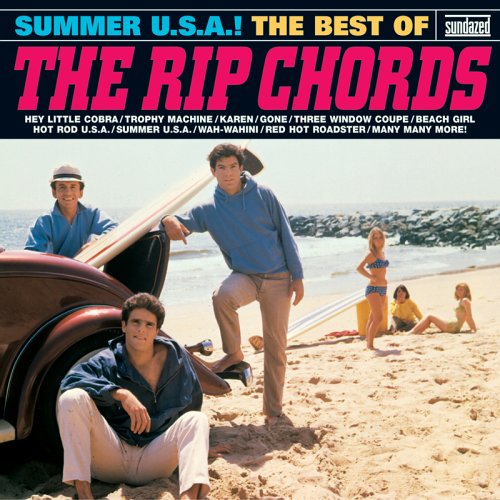
The
Rip
Chords:
Summer U.S.A.!
The Best
Of The Rip
Chords
Sundazed
Music 11168
[CD];
Released August
20, 1996
1. Hey
Little Cobra
2. The Queen
3. Trophy
Machine
4. Here I Stand
5. Karen
6. Gone
7. Three Window
Coupe
8. This Little
Woodie
9. Hot Rod
U.S.A.
10. Surfin'
Craze
11. Beach Girl
12. My Big Gun
Board
13. Summer
U.S.A.
14. One Piece
Topless Bathing
Suit
15. Wah-Wahini
16. Don't Be
Scared
17. Red Hot
Roadster
18. Wiameah Baby
(previously
unreleased)
19. Sting Ray (previously
unreleased)
20.
X.K.E. (previously
unreleased)
REVIEW:
You
gotta admire the
hubris of
Sundazed Records
with regards to
their
promotional
blurbs for this
album: on the
back cover of
this release,
the writer
unabashedly
proclaims that
"No group
epitomized the
sun-soaked
California sound
better than the
fabulous Rip
Chords." Oh,
really?
Ever heard of
another little
group called...
The
Beach
Boys?
Well, setting
that aside,
there's also the
matter that
for
a group that
only ever had
five charting
singles, Summer
U.S.A.: The
Best
of The
Rip Chords
boasts a
saber-rattling
twenty tracks,
from the
falsetto
shrieking of
"The Queen" to
the singles "Hey
Little Cobra"
and "Hot Rod
U.S.A." the
Rip Chords had a
distinctive
sound, as
supplied by
Terry Melcher
and
Bruce Johnston,
as well as
vocalists Ernie
Bringas and Phil
Stewart.
The sound was
produced by
compressing
everything on
their primitive
(even for the
time) recording
equipment.
But
despite their
lack of
consistent chart
success, this
album is
probably
the best way to
hear the very
real appeal of
The Rip Chords,
which was
always filled
with a fun and
professionalism
that other
groups
lacked.
And where groups
like Jan &
Dean and The
Fantastic
Baggys seemed to
be feeding off
the Beach Boys
sound, The Rip
Chords,
although mining
the same subject
matter, doesn't
often sound like
anyone else;
there's a cold,
silvery element
to their sound
that
transforms a
normal drag song
like "Three
Window Coupe"
into something
that demands to
be listened
to. The
harmonies are
unearthly
in
their precision
and grace that
lends the song a
classy undertow
unmatched by any
other
group.
Part of it is
the shimmering
quality the
voices achieve
by being layered
atop one
another, much
the
same way that
Brian Wilson
would
double-track
lead and backing
vocals
in order to make
them "rub
against" each
other in
sometimes
abrasive
ways; here, that
same technique,
combined with
the compressing
and echo
added by Terry
Melcher and
Bruce Johnston
give everything
a punchier
sound. If
you're looking
for the best
sampler of The
Rip
Chords,
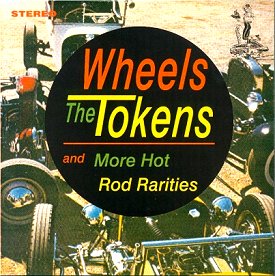
this is it. The Tokens: Wheels
and
More
Hot Rod Rarities
RCA Victor LPM2886 (Mono)
LSP2886 (Stereo) [LP]; Teen
Sound 64635 [CD];
Original LP release: 1964;
CD released March 29, 2005
1
Let's Go to the
Drag Strip
2 Little Deuce
Coupe
3 Two Cars
4 Little Hot Rod
Suzie
5 Shut Down
6 My First Set of
Wheels
7 Dirt Track
Twister
8 My Friend's Car
9 My Candy Apple
Vette
10 409
11 Little Snow
White Coupe
12 Drag City bonus
tracks:
13 The Wreck of
the John B
14 Michael
15 Shenandoah
16 Big Boat
17 Jamaica
Farewell
18 The Riddle
19 Lonesome
Traveller
20 Saloogy
21 Sunset See My
Sadness
22 Grey City Day
23 For All That I
Am
24 If I Were A
Carpenter
25 Beautiful
People
26 Green
Tambourine
27 Wake Up Little
Suzy
28 Picture In My
Wallet
29 Don't Worry
Baby
30 Barbara Ann
31 Tribute to the
Beach Boys
32 The Lion Sleeps
Tonight
33 Wimoweh
REVIEW:
For years,
I never paid
much attention
to The Tokens;
they
were the iconic
one-hit-wonders,
riding a
tidal-wave of
success from
"The Lion Sleeps
Tonight" and
seemingly
unable, like
countless other
acts, to find a
sizable
follow-up.
In fact, I
wasn't aware
that The Tokens
had ever broken
out of their
doo-wop roots
until I
stumbled across
this rare
CD. Wheels
and More Hot
Rod
Rarities
is a compilation
recording
gathering The
Tokens 1964 RCA
album Wheels,
and fills out
the original
12-tracks with
an additional 21
cuts, mostly
unrelated to the
car/drag theme,
but nice to have
anyway.
Even though The
Tokens never had
a hit as
momentous as
their break-out
single, Wheels
proves that The
Tokens were
deserving of
much more
success than
they
were accorded by
the
public. As
a vocal group,
they were
easily as
versatile as The
Beach Boys, but
on this, their
most Beach
Boys-like album,
it's clear that
the band is
still trying to
find a
formula away
from the doo-wop
roots from which
they had
sprung.
compared to the
Beach Boys, the
Tokens'
harmonies are
heavier, and
more muscular
than The Beach
Boys lighter,
clearer, and
brighter sound -
comparing
"Little Deuce
Coupe" with the
original, The
Tokens simply
don't have the
shimmer that
Brian's
arrangements
brought
to The Beach
Boys'
vocals.
The difference
becomes
especially
jarring on the
dreary "Two
Cars" which
sounds like an
thick country
dirge.
"Little Hot Rod
Suzie" carries
all the weight
of their
doo-wop roots
with it, while
"Shut Down"
lumbers along
with the deeper,
rootsier
harmonies.
The Tokens odd
sense of humor
rears it's
misshapen head
on "My First Set
Of Wheels," a
spoken-word
track easily
as bizarre as
some of the
Beach Boys
weirder album
cuts.
Better is "Dirt
Track Twister"
with it's hot
organ and
jumping doo-wop
backing vocals
propelling the
song
ahead. "My
Friend's Car"
is similarly
excellent,
showcasing The
Tokens lead
singer's
falsetto.
"My Candy Apple
Vette" is a
slushy ballad,
and
sounds like
something Fabian
might tackle on
a down
day. The
Tokens take on
"409" is quick
and powerful,
but a little
painful on the
not-quite-there
harmonies.
"Little Snow
White Coupe" is
another turgid
ballad, while
"Drag City" is
the most
successful track
at aping Jan
& Dean's
signature
sound.
Among the
bonus tracks,
"The Wreck of
the John B" is a
more traditional
take on
the folk song,
"Green
Tambourine" is a
competent cover
of the Lemon
Pipers hit
single, "Don't
Worry Baby" is a
close copy of
The Beach Boys
original,
"Barbara Ann" is
similarly
patterned
closely after
The Beach
Boys hit
version, and the
"Tribute To The
Beach Boys"
track is a
harmony laden
original song,
with a jittery
melody line that
jumps all
over the
place. The
Teen Sound CD
sounds like it's
been
mastered from
vinyl sources,
but still may be
of interest to
genre
fans.
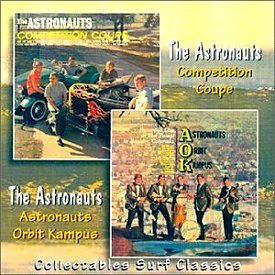
The
Astronauts: Competition
Coupe/Astronauts
Orbit
Campus
Collectables
2708 [CD];
Released
October 21,
1997
1.
Little
Ford Ragtop
2.
Competiton
Coupe
3.
Hearse, The
4. '55
Bird
5.
Devil Drivers
Theme
6.
Happy Ho-Daddy
7. Our
Car Club
8.
Devil Driver
9.
Chevy Scarfer
10.
4:56 Stingray
11. El
Aguila (The
Eagle)
12. 650
Scrambler
13.
Johnny B.
Goode
14.
Be-Bop-A-Lu-La
15.
Good Golly
Miss Molly
16. Let
The Good Times
Roll
17.
Linda Lou
18.
Bony Moronie
19.
Diddy Wah
Diddy
20.
Roll Over
Beethoven
21.
Shop Around
22.
Greenback
Dollar
23.
Summertime
24.
Sticks And
Stones
REVIEW: The
Astronauts,
a surf
band who were
contemporaries of
the Beach Boys,
were typical of
the plethora of
instrumental bands
who dipped their
toes into vocal
tracks after the
Beach Boys began
to hit it
big. In
fact, in many ways
these
five guys from
Boulder, Colorado
were best known
for their one big
hit,
the instrumental
"Baja." In
fact, this group
can almost be
considered the
flip side of the
Beach Boys;
whereas the Beach
Boys were
primarily a vocal
band who
occasionally
recorded
instrumentals, The
Astronauts were
instrumentalists
who occasionally
tried out vocals,
and
it's on this
representative
two-LPs on one CD
album that you can
hear
The Astronauts
give their most
comprehensive
vocal workout
ever. Competition
Coupe is by
far their
most vocal album
ever, and with its
drag racing theme
closely echoing
the Beach Boys'
own "409" vibe,
Beach Boys fans
might just want to
check it
out. From
the R&B of
"Little Ford
Ragtop"
and "Competition
Coupe" to the
jumping "Our Car
Club" (not the
Beach
Boys version),
it's apparent that
The Astronauts
hewed much
closer to the true
spirit of surf and
drag music
than The
Beach
Boys ever
did. The
Astronauts had a
far
greater affinity
for R&B than
Brian Wilson, and
when they sing,
the harmony vocals
are mixed much
more into the
background,
allowing
the lead singer to
belt out hot
covers of hits by
Chuck Berry,
Little
Richard, and Gene
Vincent.
You'll hear this
especially on the
"live" album which
comprises the
second half of
this CD, with the
Astronauts
breaking loose in
full-out
white-soul ecstacy
in front of a
appreciative
crowd.
Strangely, the
Astronauts sound
far
rougher and spend
far less time
churning out
instrumentals in
their
live set,
concentrating
almost exclusively
on vocal covers of
R&B
classics.
Still, this is a
great party CD,
and a
look at why
several surf/rock
bands simply
weren't in the
same league
as the
adventureous, far
more
complex Beach
Boys. If
you like what you
hear on this CD,
check out their
comprehensive box
set: The
Legendary
Group at Their
Best on
the Collectables
label.
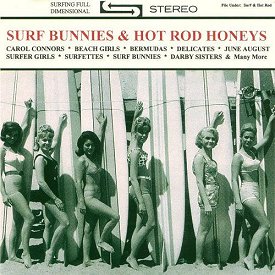
Various
Artists:
Surf Bunnies
& Hot Rod
Honeys Phantom
Sound
& Vision
SB200 [CD];
Released
November 21,
1996
1.
He's My
Surfin' Guy -
- Beach
Girls
2. Surf Bunnie
Beach - Surf
Bunnies
3. Our Surfer
Boys - Surf
Bunnies
4. You Can't
Take My
Boyfriends
Woodie - Power
Puffs
5. White Lewis
- Majorettes
6. Love Those
Beach Boys -
Sea Shells
7. Sammy The
Sidewalk
Surfer -
Surfettes
8. Skiing In
The Snow -
Beach Girls
9. Hot Rod
High - Surf
Bunnies
10. Dance To
The Surfing
Band - Hal
Blaine
11. I Miss My
Surfer Boy Too
- Westwoods
12. Califorina
Surfer - D.D.
Hope
13. Surfer's
Memories -
Fashions
14. What Does
A Lifeguard Do
In The Fall ?
- June August
15. Chu Sen
Ling -
Bermudas
16. Surfin'
Sally -
Petticotes
17. Go Go
G.T.O. - Carol
& Cheryl
18. Black And
White
Thunderbird -
Delicates
19. Don't Drag
No More -
Susan Lynn
20. Yum Tum
Yamaha - Carol
Connors
21. Draggin'
Wagon - Surfer
Girls
22. Daddy, You
Just Gotta Let
Him In -
Satisfactions
23. A Swingin'
Summer - Carol
Connors
24. Go Back Go
Back To Your
Pontiac -
Darby Sisters
25. Hot Rod
City - Marie
& The
Papaya Girls
26. Sport Car
Sally -
Bernadette
Castro
27. Baby Blue
Mustang -
Petites
28. The Cycle
Set - Donna
Loren
29. Bad
Motorcycle -
Storey Sisters
30. Get Your
Daddy's Car
Tonight -
Petites
31. Motocycle
Michael -
JoAnn Campbell
32. In His Car
- Robin Ward
REVIEW:
This
is
one of those
rare
compilations
that slipped
past me 12 years
ago -
I'd never even
heard of it
until I was
surfing the
internet and
stumbled upon
it. Long
out of print,
and possibly a
bootleg, Surf
Bunnies &
Hot Rod
Honeys
is a fantastic,
unusual snapshot
of a
very narrow band
of female
artists that
sprung up after
the popular
success of the
Beach Boys and
Jan and Dean.
I've
collected
Girl Group
recordings for
nearly as long
as I've been
after The Beach
Boys, and I'd
never heard of
some of these
records or
artists, and
despite starting
off with the
dreary "He's My
Surfin' Guy" by
the Beach Girls,
the album pops
with the
subsequent
tracks, with
everything from
the
lush "I Miss My
Surfer Boy Too"
to the barely
legal "You Can't
Take My
Boyfriend's
Woodie" which
proclaims "it
don't look like
much, but when
he pumps that
clutch, he makes
you think you're
in reverse."
...Somehow
I don't think
they're talking
about cars.
The disc
is nicely
divided into two
halves, with the
first
tackling surf
numbers, and the
second focusing
on cars and
racing, and
the songs range
all over the
map, with
R&B
("Surfer's
Memories")
rubbing
shoulders with
the 12-bar blues
of "What Does A
Lifeguard Do In
The Fall?" -
while tribute
songs like "Our
Surfer Boys"
name-drops Brian
Wilson, The
Beach Boys, and
Jan & Dean
all
within the space
of the obvious
chorus.
There's
also the odd
inclusion, like
the
Japanese-flavored
"Chu Sin Ling"
by the Bermudas,
with its odd,
angular
harmonies
spicing up the
playlist.
But
my favorite
track has to be
the "Don't Back
Down" -inspired
"Don't Drag
No More," which
could be
considered the
feminine
flip-side to The
Beach
Boys track.
Perhaps
most surprising
about this
compilation is
who's NOT here,
with The Honeys
making a
staggering
no-show amid the
massively-stacked
32 tracks.
Overall,
the quality of
the
songs and
artists is very
high, with
tongue-in-cheek
fun to be found
on
almost every
track, and the
sound for these
rare tracks is
phenomenal.
A terrific
and rare
compilation that
you should
immediately
snag if you spot
it.
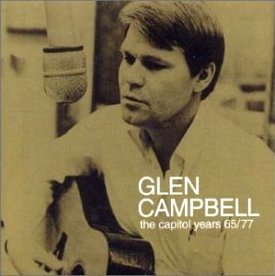
Glen
Campbell:
The Capitol
Years 65/77 EMI
International
821834
[CD];
Released
December 14,
1999
Features:
46
tracks from
Campbell's
twelve years
at Capitol
Records
Hits
include:
"Gentle On My
Mind", By The
Time I Get To
Phoenix",
"Rhinestone
Cowboy",
"Witchita
Lineman,"
"Southern
Nights" and
many more.
Rare
b-sides and
singles,
including the
Brian
Wilson-penned
"Guess I'm
Dumb".
REVIEW: I
haven't
had anyone, in all
the years I've run
the site, really
ask
about Glen
Campbell, who
played on several
of the Beach Boys
studio
session in the
early-to-mid
sixties, and who
filled in for
Brian on
tour before
embarking on a
solo career.
To be
honest, I've
never
paid him much
attention either,
always lumping him
in with other
early
country-crossover
artists and MOR
singers from the
1970s. But
this double-disc
import CD has
changed my mind
about
Campbell,
and about his
talent. I
was surprised to
hear strong
likenesses
to the early
folk-pop of John
Denver, as
well as
the Country-Rock
music
co-pioneered by
former
Monkee Michael
Nesmith.
Along with
these
likenesses, there
are also powerful
art-pop influences
in these
story-songs, with
lots of Cambell's
powerful, supple
singing and
sensitive guitar
work that made him
so invaluable as a
session player
for the Beach
Boys, and on
stage. Of
key interest to
Beach
Boys
fans will be the
song that Brian
Wilson penned as a
"thank-you" to
Campbell for his
help with touring
- the art-rock
song "Guess I'm
Dumb"
which prefigures
some of the
extraordinary work
that Brian would
bring
to Pet
Sounds
and Smile.
And while
there have been
numerous other
compilations which
try
to touch all the
bases in
Campbell's
incredibly strong
catalog, it's
this double disc
import that
remains strong
from beginning to
end, with
nary a weak track
in the bunch.
If you're a
big fan of The
Beach
Boys music from Today
through Pet
Sounds,
I'd recommend you
give these tracks
a listen - it's
powerful music
that's worth
hearing. I'm
seriously
considering
checking out
more music from
his catalog as
well.
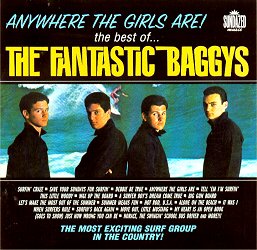
The
Fantastic
Baggys:
Anywhere The
Girls
Are! Sundazed
Music 11084 [CD];
Released
December 19,
2000
The
Fantastic
Baggys (named
after the
popular shorts
that surfers
wore) were,
like The Rip
Chords and
Ronny
and the
Daytonas, a
completely
manufactured
group (and
remember, this
was years
before the
Monkees!)
which
consisted of
songwriters
Phil
"P.F" Sloan
and Steve
Barri who
had notable
success
recording
as a fictional
band styled
after The
Beach
Boys.
The
songwriters
weren't shy
about
blatantly
ripping off
other songs,
as you
can hear on
the lead-off
track "Surfin'
Craze," which
is so similar
to
"Surfin' USA"
in sound and
performance it
could almost
be an
alternate
take from the
Beach Boys'
vaults!
And since the
Baggys were a
one-album
phenomenon,
there is no
artistic
growth to be
found, but
there is lots
and lots of
Surf/Sun/Girls/Cars
to be found in
this
generous
28-track
compilation.
It doesn't
hurt that
the lead
singer is a
vocal ringer
for Mike Love,
right down to
the
too-nasal delivery,
or that the
Baggys have a
disturbingly
high ratio of
phallic-themed
songs: "This
Little Woody,"
"Wax
Up Your
Board," "A
Surfer Boy's
Dream Come
True" and "Big
Gun Board"
all tout
the <cough!>
attributes of
these
one-track-minded
surfers.
Putting all
that aside
however, the
Fantastic
Baggys have an
impressive
sound, nearly
matching in
tone and
style The
Beach Boys
themselves -
and if the
songs are
stuck in
surf/car mode
throughout,
well, you can
blame it on
Summer.
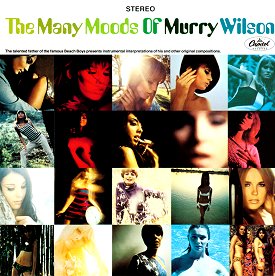
The
Many Moods of
Murry Wilson
Capitol
ST-2819
[LP], Released
1967; Toshiba
EMI (Japan)
66037 [CD],
Released
2002
1.
Love Won't
Wait
(Murry Wilson)
3:14
2. The Happy
Song (Eck
Kynor) 2:06
3. The Warmth
Of The Sun
(Brian Wilson)
2:46
4. Broken
Heart (George
Kizanis) 2:11
5. Leaves
(Murry Wilson)
2:41
6. The
Plumbers Tune
(Eck Kynor)
2:23
7. Painting
With Teardrops
(Murry Wilson)
2:35
8. Island In
The Sky (Rick
Henn) 2:54
9. Just 'Round
The River Bend
(Don
Falke/Deeda
Patrick) 2:12
10. Italia
(Alan
Jardine) 2:31
11. Heartbreak
Lane (Murry
Wilson) 2:41
12. Betty's
Waltz (Murry
Wilson/Audree
Wilson) 1:49
Arranged
and conducted
by Don
Ralke
Conceived and
Produced by
Murry Wilson
REVIEW:
Sometimes,
you
just have to
wonder what
genetic
pool Brian
Wilson's
talent springs
from. Much
like Mozart,
Brian's paternal
heritage seems
to be the only
logical source,
and, much like
Amadeus, Brian's
talent far
eclipsed his
father's, which
seemed an
unending source
of gall to Murry
Wilson.
Biographers
contantly point
to his one
published
song: "Two-Step
Side Step,"
which was
recorded by none
other than
Lawrence Welk,
as Murry's
single claim to
fame.
Murry used
that single song
to claim
dominance over
his son in the
studio, in
songwriting
ability, and in
lording over
Brian at every
chance he
got. But
it's in this
1967 LP that
regular folks
really got a
chance to see
the senior
Wilson could
do. To be
honest, The
Many Moods of
Murry Wilson
isn't a terrible
album, it's
simply
unmemorable,
old-fashioned,
and for the
times it was
released
in, hopelessly
square.
None of the
songs here
really make an
impression,
unless it's the
familiar melody
of Brian's "The
Warmth Of
The Sun," or the
cool spy jazz
intro to "The
Plumbers Tune"
which then
devolves into
horrible, tweaky
organ solo with
seasick strings
gulping
behind it.
If this album
had been
released in,
say, 1959 - it
would have fit
right into the
generic lounge
slush which was
being
produced en
masse at the
time, but in
1967, not only
was this album
hopelessly
anachronistic,
it was doomed by
the association
to the
then-sinking
Beach Boys, who
were in full
flame-out mode
with Smiley
Smile.
And how does
Al Jardine's
"Italia"
fare?
Well, to be
honest, it fits
in perfectly,
which is
pretty
damning -
it's a cutsy,
cloying, bouncy
piece of
nostalgia which
sounds like
nothing else
he's ever
written.
My favorite
track on the
album is the
comparitively
moody and subtle
"Islands In The
Sky" by Sunrays
member Rick
Henn, which
sounds slyly
cool and
subdued.
But the bulk of
the album is
swirling
strings,
fluttering
organ, and
pedestrian
melodies.
For
completists
only.




 , as
well as
the Country-Rock
music
co-pioneered by
former
Monkee
, as
well as
the Country-Rock
music
co-pioneered by
former
Monkee